Mangala Gauri Vrat: Why Tuesdays of Shravan Are Dedicated to Gauri
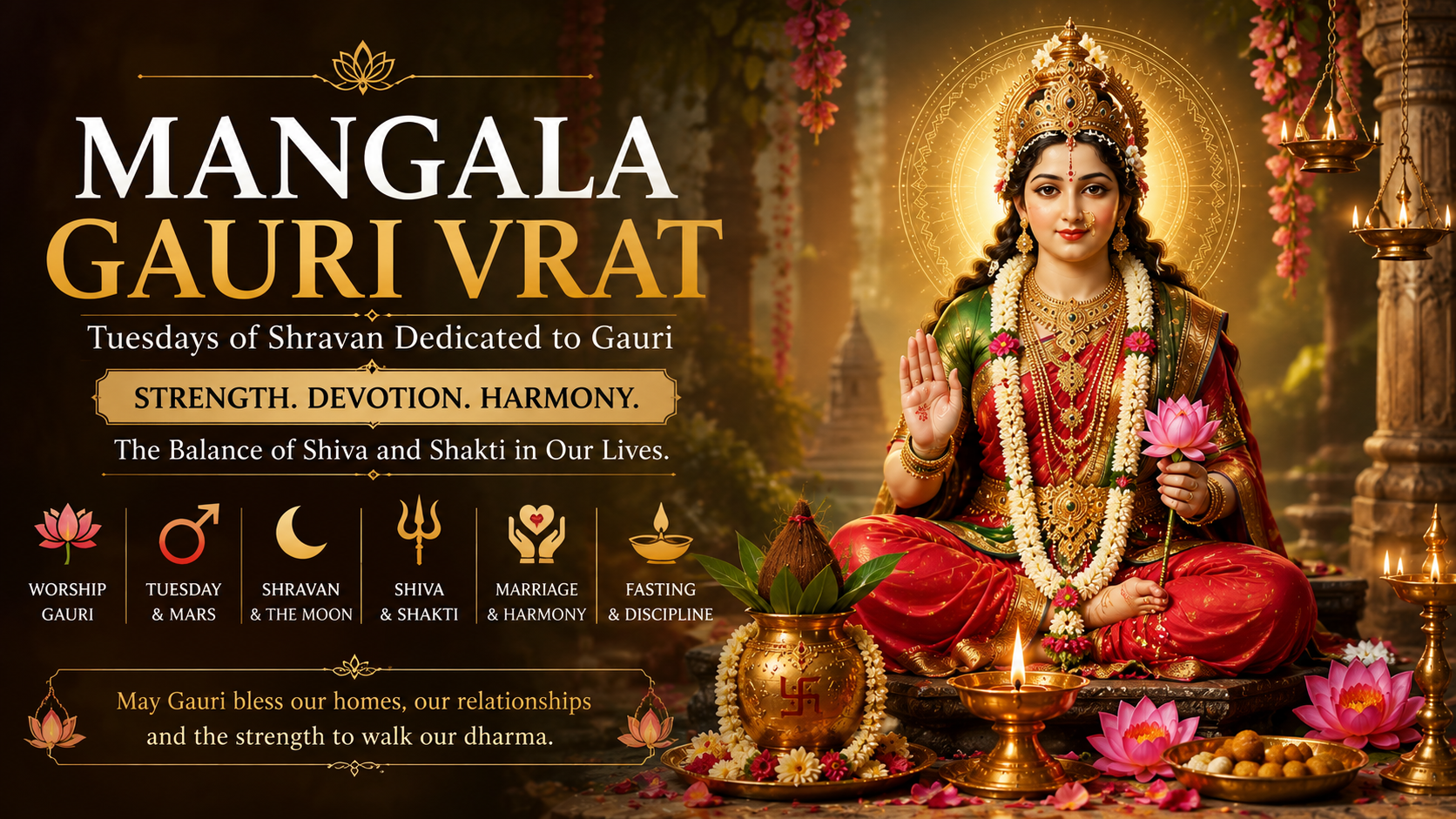
Today, Tuesday, August 25, 2026, marks the fourth Mangala Gauri Vrat of the North Indian Shravan calendar.
Shravan is widely associated with Lord Shiva.
Mondays belong to Shiva.
But Tuesdays during Shravan bring another important dimension into the month:
Gauri.
Mangala Gauri Vrat is traditionally associated with Goddess Parvati in her Gauri form and is particularly observed by married women seeking marital harmony, family wellbeing and the blessings of the Goddess.
The observance is especially interesting from a Jyotish perspective.
Why Tuesday?
Tuesday is associated with Mangala, or Mars.
Gauri is the feminine power associated with Shiva.
And Shravan is a month deeply connected with Shiva worship.
So within one observance, we find an interesting intersection of:
Mars, Shakti, Shiva, marriage, discipline and devotion.
But Mangala Gauri is more than a ritual for married life.
Its deeper symbolism is about the relationship between strength and nurturing, action and devotion, independence and partnership.
What Is Mangala Gauri Vrat?
Mangala Gauri Vrat is traditionally observed on Tuesdays during the month of Shravan.
The word "Mangala" refers to Tuesday and is also associated with Mars.
"Gauri" is a name of Goddess Parvati.
Therefore, Mangala Gauri can broadly be understood as the worship of Gauri on Tuesday.
In the 2026 North Indian calendar, the four Tuesdays of Shravan fall on:
August 4
August 11
August 18
August 25
Therefore, August 25 is the fourth Mangala Gauri Vrat of the month. (drikpanchang.com)
The observance is traditionally associated particularly with married women, although devotional practices and customs vary considerably between regions and communities.
Why Is Gauri Worshipped During Shravan?
Shravan is strongly associated with Shiva.
But Shiva cannot be completely separated from Shakti.
Shiva represents consciousness, stillness and transcendence.
Shakti represents energy, manifestation and the power through which consciousness becomes active in the world.
Parvati is Shiva's Shakti.
Gauri is one of the names through which Parvati is understood.
Therefore, worshipping Gauri during Shravan creates an important balance.
Shravan is not simply about Shiva as an isolated deity.
It also invites reflection on Shiva and Shakti together.
Stillness and movement.
Consciousness and energy.
Detachment and relationship.
Meditation and action.
Why Tuesday?
This is perhaps the most interesting astrological question.
In Jyotish, Tuesday is ruled by Mars, known as Mangala or Kuja.
Mars represents:
Courage.
Action.
Strength.
Competition.
Assertion.
Physical energy.
Conflict.
Determination.
Land.
And the ability to act decisively.
At first glance, these qualities may seem very different from the gentle image of Gauri.
But perhaps that contrast is precisely what makes Mangala Gauri meaningful.
A household needs nurturing.
But it also needs strength.
A relationship needs affection.
But it also needs boundaries.
A person needs softness.
But also courage.
Shakti is not weakness.
Shakti is power.
The Mars-Gauri Connection
Traditional festival symbolism should not be reduced to a simple equation such as:
"Tuesday = Mars = Gauri."
The connection is subtler.
Mars represents active energy.
Gauri represents divine feminine power.
Shravan represents devotion to Shiva.
Together, the symbolism creates a picture of energy operating within a sacred relationship.
This becomes particularly relevant to marriage.
Marriage is not simply companionship.
It requires:
Patience.
Courage.
Communication.
Protection.
Responsibility.
Adaptability.
And the ability to act when action is required.
Mars provides the capacity to act.
Gauri represents the nurturing and sustaining dimension of Shakti.
The combination is therefore more interesting than simply asking for marital longevity.
Gauri and the Meaning of Marriage
Mangala Gauri Vrat is particularly associated with married women and prayers for the wellbeing and longevity of the husband.
This reflects a traditional social and religious framework.
But the symbolism can be interpreted more broadly today.
Marriage is a partnership.
Its wellbeing cannot depend entirely on one person's prayers or sacrifices.
A healthy marriage requires the participation of both people.
It requires mutual respect.
Trust.
Emotional maturity.
Responsibility.
And the ability to navigate conflict without destroying the relationship.
This is where the Mars symbolism becomes relevant.
Mars can create conflict.
But Mars can also create courage.
The difference is how the energy is directed.
Mars Is Not Simply the Planet of Conflict
Mars is often described as the planet of aggression.
That is incomplete.
Aggression is only one expression of Martian energy.
Mars also gives:
Initiative.
Courage.
Competitive ability.
Physical vitality.
Persistence.
Decisiveness.
The willingness to defend something valuable.
A person without Mars can struggle to take action.
A person with excessive or poorly directed Mars may become combative.
Therefore, the goal is not to eliminate Mars.
It is to discipline Mars.
This is one reason Tuesday fasting and devotional practice can be understood symbolically as a method of directing energy rather than suppressing it.
Gauri as Strength With Grace
The name Gauri is often associated with brightness, purity and radiance.
Parvati is not merely a passive consort of Shiva.
In Hindu mythology, she appears through many powerful forms.
Parvati.
Durga.
Kali.
Gauri.
Each form highlights a different dimension of Shakti.
This is important because femininity in Indian spiritual traditions is not represented exclusively through softness.
The feminine divine can nurture.
Protect.
Destroy.
Create.
Fight.
Transform.
And liberate.
Mangala Gauri therefore provides a useful reminder:
Grace and strength are not opposites.
The Symbolism of Four Tuesdays
Today is the fourth Mangala Gauri Vrat of this Shravan.
There is something meaningful about repetition.
The devotee returns each Tuesday.
The ritual is repeated.
The prayer is repeated.
The commitment is repeated.
This is how a vrata works at a deeper level.
A vrata is not simply a one-time request.
It is a disciplined observance.
The person makes a commitment and continues it through a defined period.
That creates a relationship between intention and action.
What Is a Vrata?
The Sanskrit word vrata is associated with a vow, observance or disciplined religious practice.
This is important.
A vrata is not merely:
"I want something, so I will perform a ritual."
It can instead be:
"I am choosing to discipline myself around something that matters to me."
That difference is significant.
Prayer asks.
A vrata also commits.
And commitment changes the practitioner.
Why Fasting Is Part of the Practice
Fasting is commonly associated with many Hindu vratas.
Different communities follow different rules.
Some devotees fast strictly.
Others avoid certain foods.
Some eat once.
Others consume fruits or fasting foods.
There is no single universal Mangala Gauri fasting practice followed identically everywhere.
The deeper principle is restraint.
Fasting creates a deliberate boundary around appetite.
The person says:
"I can experience desire without immediately satisfying it."
That is a valuable psychological discipline.
The Moon and the Mind
There is another interesting dimension.
Shravan is a lunar month.
The Moon is central to the Hindu calendar.
In Jyotish, Chandra represents the mind, emotions, memory, receptivity and nourishment.
Gauri worship during a lunar month therefore adds another layer to the symbolism.
Mars provides action.
The Moon provides emotional responsiveness.
Gauri represents Shakti.
The practitioner is therefore working with a symbolic combination of:
Feeling + energy + intention.
A person needs all three.
Emotion without action remains an intention.
Action without emotional awareness can become destructive.
And intention without discipline often remains incomplete.
Mangala Gauri and the 7th House
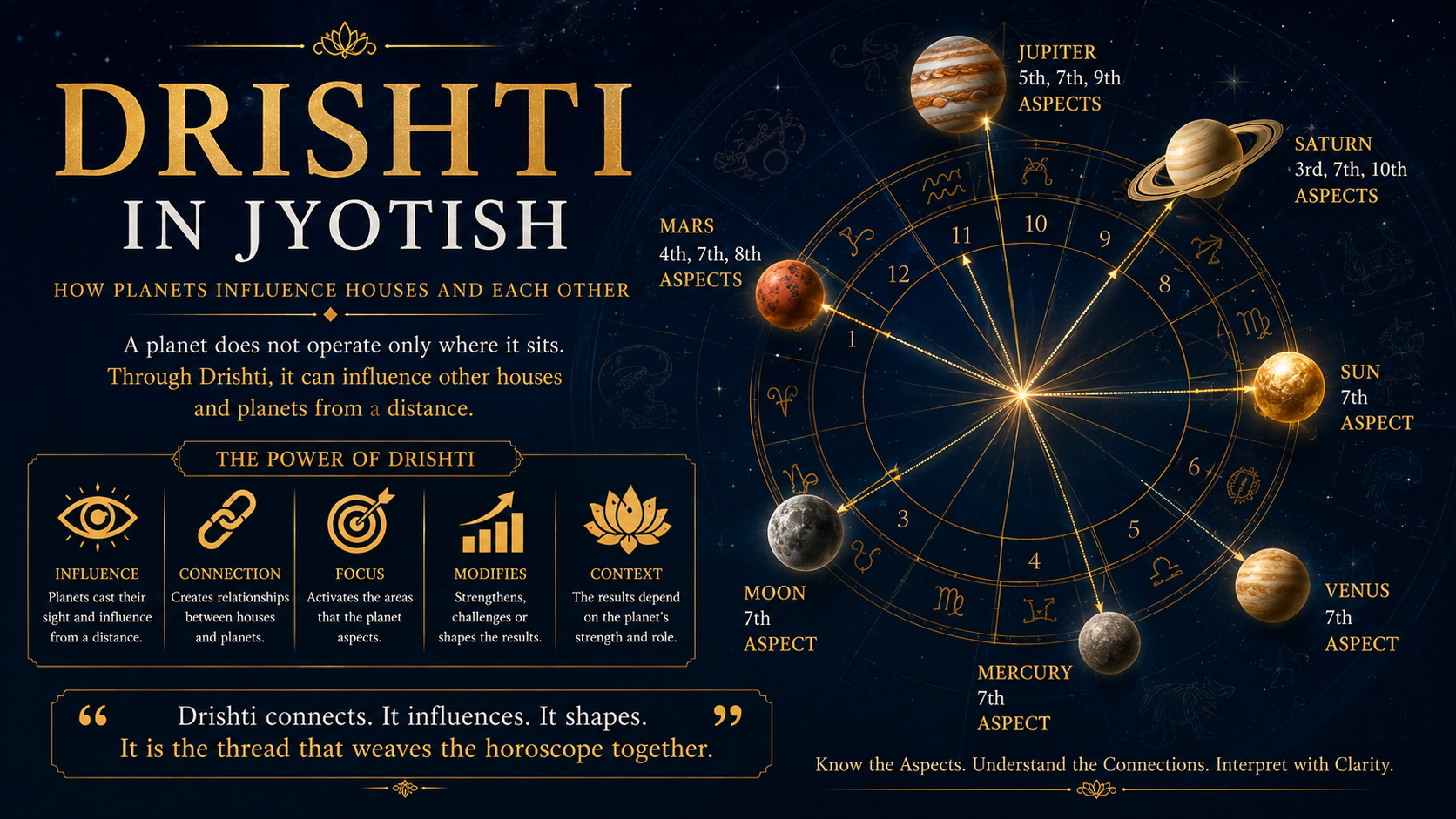
For students of Jyotish, the connection with marriage naturally brings the 7th house into the discussion.
The 7th house represents marriage, partnership, spouse and significant one-to-one relationships.
But marriage cannot be interpreted through the 7th house alone.
The 7th lord matters.
Venus is an important natural significator for relationships and marriage.
Jupiter has significance in traditional assessment of husband and family-related matters, with the exact interpretation depending on the native and the astrological framework being used.
The 2nd house can be relevant to family continuity.
The 4th can describe domestic happiness.
The 5th can contribute to children and emotional investment.
And the 8th can become relevant to longevity and the deeper bonds within marriage.
This is why a serious astrologer should never reduce marriage to one house or one planet.
Mars and Marriage
Mars deserves special attention because Mangala Gauri occurs on Tuesday.
Mars in relationship astrology is often feared.
Manglik Dosha is one of the most widely discussed examples.
But the simplistic interpretation that "Mars damages marriage" is inadequate.
Mars represents energy.
Energy can become conflict.
But it can also become passion, courage, initiative and protection.
The actual outcome depends upon:
The sign.
The house.
The lordship.
Planetary dignity.
Aspects.
Conjunctions.
Strength.
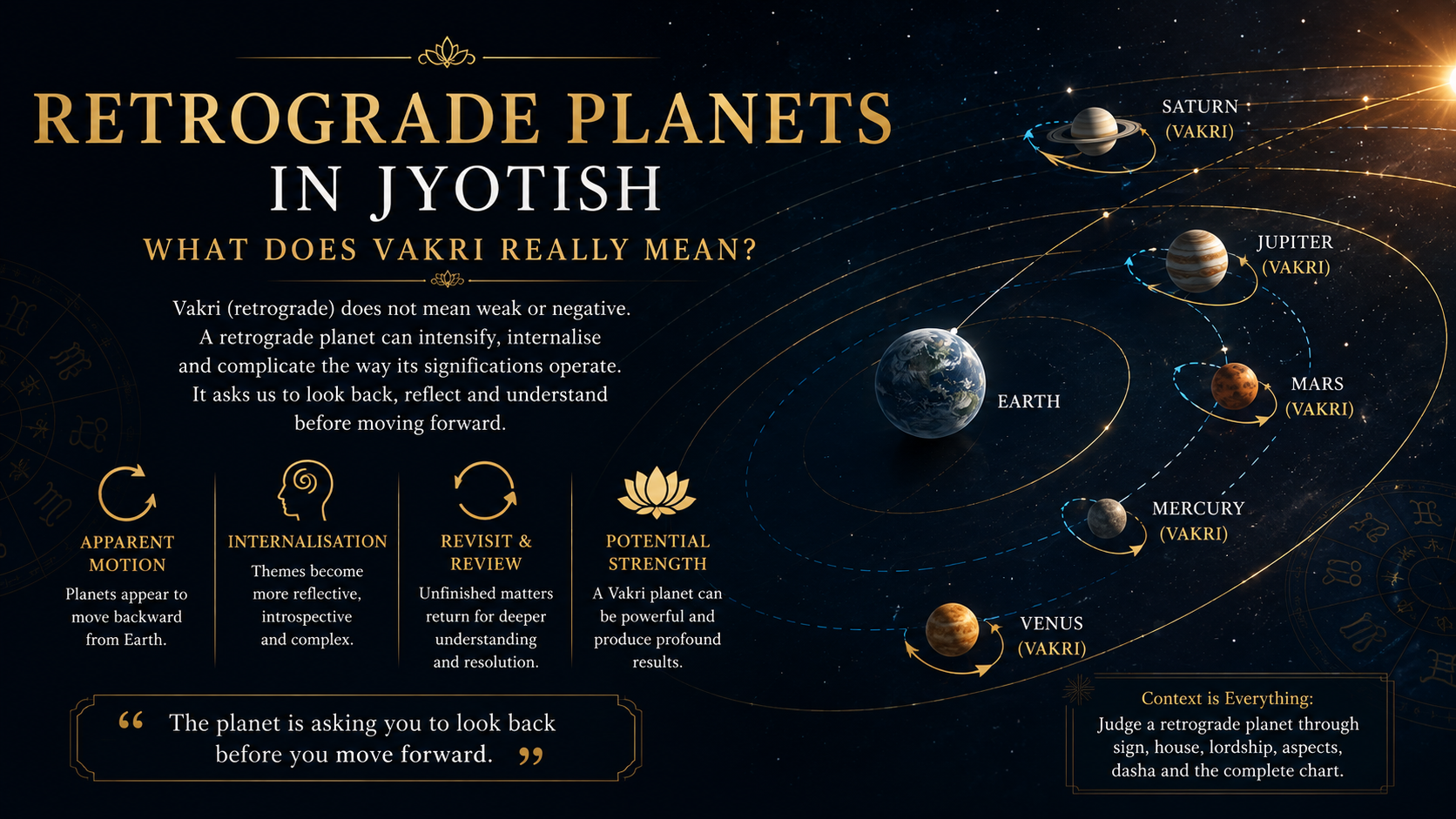
The condition of the 7th house and 7th lord.
The relevant divisional chart.
Dasha.
Transits.
And the complete horoscope.
This is another reason why astrology should not be practised through fear.
The Deeper Meaning of Mangala
The word "Mangala" itself has a broader association with auspiciousness, even though in Jyotish Mangala is the name of Mars.
This creates an interesting contrast.
Mars is often feared because of conflict.
Yet disciplined Mars can produce extraordinary courage.
A soldier needs Mars.
An athlete needs Mars.
An entrepreneur needs Mars.
A surgeon needs Mars.
A person defending someone vulnerable needs Mars.
The question is not:
"Do I have Mars?"
Everyone does.
The question is:
How is my Martian energy being expressed?
Gauri and the Transformation of Energy
This is perhaps where the spiritual symbolism becomes most useful.
Shakti is energy.
Energy can create.
Energy can destroy.
Energy can protect.
Energy can transform.
The spiritual objective is not necessarily to eliminate energy.
It is to direct it.
This is true of Mars as well.
Anger can become aggression.
Or it can become the courage to establish a boundary.
Desire can become obsession.
Or it can become motivation.
Competition can become jealousy.
Or it can become excellence.
The same energy can produce different outcomes depending on consciousness.
What Does Mangala Gauri Teach About Relationships?
Perhaps the most useful lesson is that relationships require both softness and strength.
Softness without boundaries can become self-neglect.
Strength without compassion can become domination.
A mature relationship requires both.
There must be affection.
But there must also be honesty.
There must be compromise.
But there must also be boundaries.
There must be emotional openness.
But also personal responsibility.
This balance is one way of understanding the deeper Shiva-Shakti symbolism.
Gauri Is Not Only About Marriage
Although Mangala Gauri is traditionally associated with married women, Gauri herself represents much more than marital wellbeing.
She represents Shakti.
The power of the feminine divine.
The force through which life is nurtured and transformed.
Therefore, the symbolism can speak to anyone.
What kind of strength do you possess?
How do you use it?
Do you protect what matters?
Can you remain compassionate while being strong?
Can you act decisively without becoming destructive?
These questions are not limited to marriage.
The Importance of Ritual
It is easy to dismiss ritual as repetition without meaning.
But ritual has a psychological structure.
You choose a time.
You choose an action.
You repeat it.
You create an association.
The mind begins to recognise that period as sacred.
This can produce a shift in attention.
The external ritual becomes a container for an internal intention.
This is one reason traditional practices can survive across generations.
They provide a structure through which abstract ideas become lived experience.
The Fourth Mangala Gauri Vrat as Completion
Today is the fourth Tuesday.
That makes the observance a natural point for reflection.
What did the practice mean over the previous three Tuesdays?
Did the ritual change anything internally?
Did it create discipline?
Did it reduce impulsiveness?
Did it create time for prayer?
Did it make you more conscious of your relationships?
If the answer is no, perhaps the ritual became mechanical.
And that itself is useful to notice.
The purpose of a vrata is not simply to complete a number of rituals.
It is to cultivate something within the practitioner.
What Should We Ask From Gauri?
Traditional prayers may seek:
Marital harmony.
Family wellbeing.
Health.
Prosperity.
Protection.
Longevity.
These are natural human desires.
But perhaps there is another prayer worth adding:
Give me the strength to become worthy of what I am asking for.
If you ask for a harmonious relationship, develop the capacity to communicate.
If you ask for family wellbeing, become responsible toward your family.
If you ask for strength, learn to use strength wisely.
If you ask for courage, be willing to face uncomfortable truths.
This turns prayer into a form of self-development.
Astrology and the Ethics of Remedies
This is also where astrologers need to be careful.
Mangala Gauri Vrat may be recommended within certain traditional remedial frameworks.
But an astrologer should not present it as a guaranteed solution to every marriage problem.
A ritual cannot substitute for communication.
A puja cannot erase abusive behaviour.
A fast cannot replace medical treatment.
And no planetary remedy should become an excuse to avoid personal responsibility.
Astrology can provide a symbolic framework.
Human beings still have to act.
Shiva and Shakti Are Not Separate
Perhaps this is the most beautiful lesson hidden within the observance.
Shravan is associated with Shiva.
Mangala Gauri is associated with Parvati.
But Shiva and Parvati are not simply two unrelated deities.
They represent a profound philosophical relationship between consciousness and energy.
Shiva without Shakti is often described as pure potential.
Shakti without Shiva is ungrounded movement.
Together, they represent a complete reality.
In human life, we also need both.
Stillness and action.
Reflection and courage.
Awareness and energy.
What Mangala Gauri Can Teach Us Today
The modern world often encourages extreme versions of one quality.
Be aggressive.
Be ambitious.
Never compromise.
Or alternatively:
Always be agreeable.
Always accommodate.
Always keep the peace.
Neither extreme is sustainable.
Mangala Gauri offers another possibility.
Be strong without becoming harsh.
Be compassionate without becoming powerless.
Be devoted without abandoning discernment.
Be committed without becoming possessive.
These are useful principles far beyond religious observance.
Final Thoughts
The fourth Mangala Gauri Vrat falls on Tuesday, August 25, 2026, during the Shravan month in the North Indian calendar. The same day also carries the observance of Bhauma Pradosh Vrat, making Tuesday particularly rich in traditional religious significance. (drikpanchang.com)
Mangala Gauri is traditionally associated with Goddess Parvati, marital harmony and family wellbeing.
But its symbolism reaches further.
Tuesday is ruled by Mars.
Mars represents action, courage and strength.
Gauri represents Shakti.
Shravan brings the entire observance into the larger devotional atmosphere of Shiva.
And the vrata introduces discipline.
Together, these elements create a powerful idea:
Strength must be guided by awareness.
A relationship needs love, but also courage.
A family needs nurturing, but also boundaries.
A person needs devotion, but also discernment.
And power is meaningful only when it is directed toward something worthwhile.
Perhaps that is the deeper lesson of Mangala Gauri.
Not merely:
"May my marriage be protected."
But:
"May I become capable of protecting what is worthy of love."
Not merely:
"May I receive strength."
But:
"May I learn how to use strength wisely."
Not merely:
"May Gauri bless my life."
But:
"May I recognise the Shakti already present within it."
That is where a traditional vrata becomes more than ritual.
It becomes a practice of consciousness.
And perhaps that is the real purpose of all serious spiritual observance.
**Not simply to change our circumstances.
But to change the person who meets them.**
Learn Jyotish Beyond Simple Planetary Keywords
The relationship between Mars, marriage, the 7th house, Venus, Gauri and Shiva cannot be reduced to one planetary rule.
Serious Jyotish requires understanding how houses, lords, significators, aspects, divisional charts, Dashas and transits work together.
At Futureye, we focus on astrology as an interpretive discipline rather than a collection of isolated rules and fear-based remedies.
Explore Futureye's astrology programs and learn how to interpret Jyotish with structure, context and judgement.
About Futureye
Futureye is a practitioner-focused learning platform for serious students of astrology and occult sciences.
Our programs cover:
- Vedic Astrology
- KP Astrology
- Prashna Shastra
- Palmistry
- Tarot
- Numerology
- AI + Occult
Don't just learn astrology. Learn how to interpret it.
Sources
Drik Panchang — Shravana 2026 Hindu Festivals: https://www.drikpanchang.com/festivals/lunar-month/festivals-shravana.html?year=2026
Drik Panchang — August 25, 2026 Panchang: https://www.drikpanchang.com/panchang/day-panchang.html?date=25/08/2026
Times of India — Weekly Panchanga, August 24–30, 2026: https://timesofindia.indiatimes.com/astrology/horoscope/weekly-panchanga-2430-august-2026-raksha-bandhan-putrada-ekadashi-onam-lunar-eclipse-and-shubh-muhuratas/articleshow/133407654.cms
Suggested Internal Links
- The Fourth Shravan Somwar: Why Monday Holds a Special Place in Shiva Worship
- Panchang Is More Than a Calendar
- The 12th House Is Not Just the House of Loss
- Tulsidas Jayanti: Dharma Beyond Prediction
- Karma and Free Will in Vedic Astrology
- The 5th House in Vedic Astrology
- Marriage in Vedic Astrology: Beyond the 7th House
Want to understand how Jyotish actually evaluates marriage, Mars, the 7th house and relationship patterns?
Explore Futureye's astrology programs and learn how to interpret these combinations systematically—not through isolated planetary keywords or fear-based predictions.
Ready to Learn the Secret Vidya?
Live cohort-based occult mastery — Vedic Astrology, Prashna Shastra, KP, Palmistry, Numerology, Tarot. Taught by Kushal Agarwal, ICAS faculty, with an AI practice agent that drills you on weak topics until they become second nature.
Or reach us at: info@thefutureye.com · +91 6290 273 797